
The Merit of Melania
Amazon’s foray into Trumpworld is a bold indictment of the documentary genre.
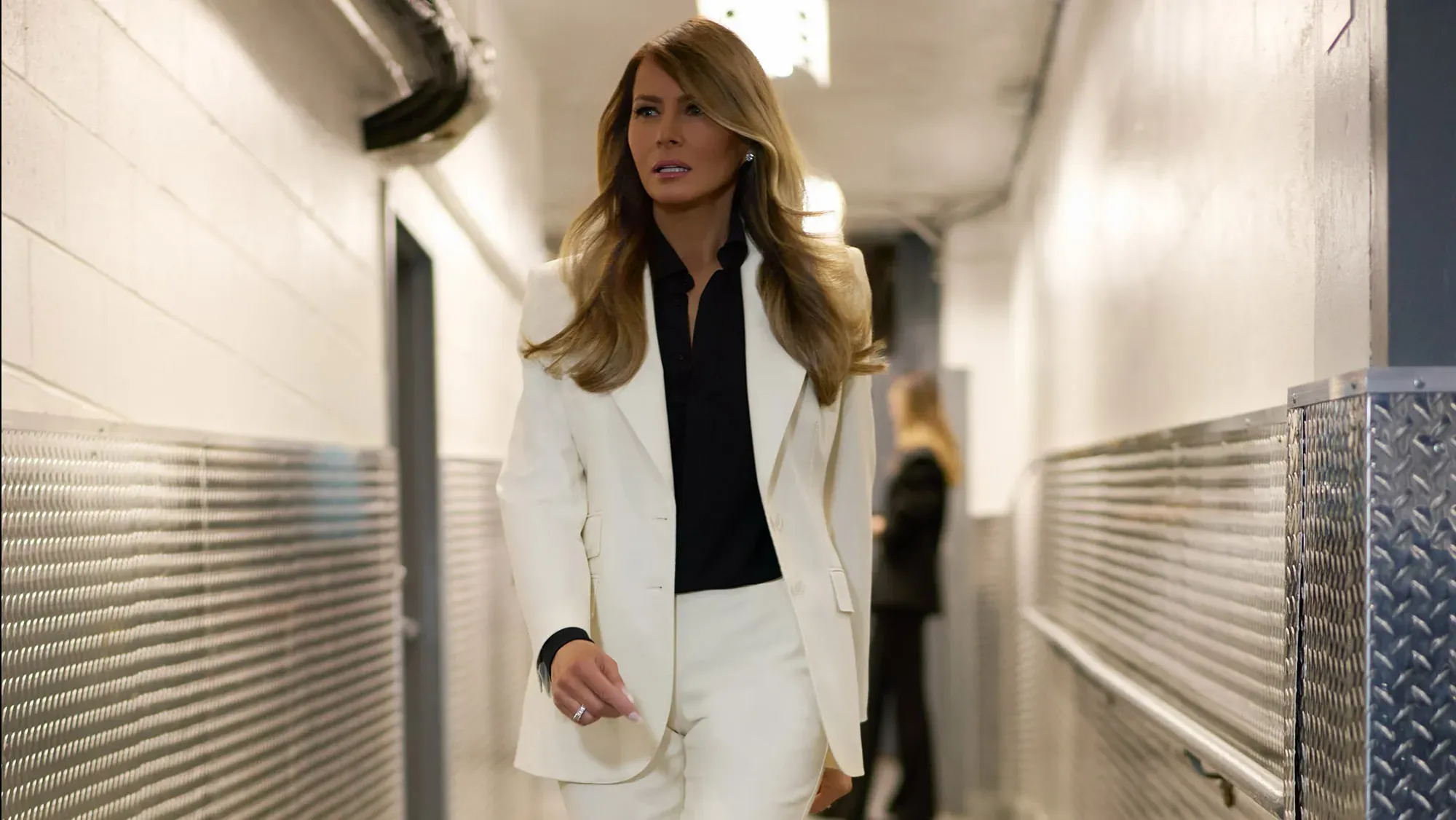
The opening chords of The Rolling Stones’ “Gimme Shelter” wash over a drone shot of Mar-a-Lago. As the camera shifts to a set of black high heels and then tilts up to the once-and-future First Lady, Mick Jagger screams “War, children, It's just a shot away. It's just a shot away.”
This is not a typical moment in what’s come to pass for a documentary in 2025–an endless stream of brooding explanations of lefty issues or recreations of murders rubber stamped for Netflix with overwrought scores. It’s the opening salvo of a Hollywood movie set to a song that Martin Scorsese has used three times in his Italian and Irish gangster epics.
The film’s director, Brett Ratner, clearly knows this. So does the Hollywood trade Indiewire, which cautioned its readers on Thursday in the wake of the film’s post-pandemic box-office record for a documentary that, “Every documentary filmmaker should be worried about the success of 'Melania.’” As Addie Morfoot writes in her diatribe, Ratner’s film may well be the death knell for filmmakers “motivated to make complex nonfiction films with a worldview that disrupts the status quo.”
But it's this naked, smug lefty do-gooderism that has eroded the documentary form for the last two decades–a mode of filmmaking that has brought hagiographic movies on Ilhan Omar, The Obama Administration’s final year, and the rise of AOC and Cori Bush to festivals like Sundance, gussied them up with with bloated 90%+ Rotten Tomatoes scores, and endowed them with multimillion dollar distribution deals only to find audiences of all political stripes wildly disinterested well before the press blitz faded. Half a decade before Melania, Amazon shelled out embarrassingly large sums for docs on Stacey Abrams and Mayor Pete that garnered less viewers than decades old episodes of Bob Ross’s PBS show and serve as further examples of the “complex nonfiction films” Morfoot cautions are endangered.
Melania may have a 7% on Rotten Tomatoes and a slew of articles about its embarrassingly low critical performance. Clear evidence exists that at least one critic reviewed the film while boasting that he hadn’t seen it. The hackneyed Nazi allusions abound in pubs from Paste to Vanity Fair, which compared Ratner unfavorably with Hitler’s go-to auteur, Triumph of the Will director Leni Riefenstahl.
Yet, the film and its director are not victims. In fact, Ratner–arguably Hollywood’s most cookie-cutter blockbuster filmmaker–has proven himself quite the disrupter of the status quo with Melania, one of the few documentaries in recent memory to move the form forward while exposing the propagandistic mode that has dominated the genre since the rise of Michael Moore.
At its core, Melania appears to work within the confines of cinéma vérité, a fly-on-the-wall documentary approach that tries to capture life as it is unfolding. Set in the 20 days before Trump's second inauguration, the film consists largely of small moments: Melania overseeing dress fittings, previewing ball invitations, and switching effortlessly between French and English while zooming with her French counterpart, Brigitte Macron, about cyberbullying. The result presents Melania as a master of aesthetics, someone who has found herself through the detritus of status and spectacle. Her true crisis is not one of fitting in, but using her newfound power to extend the opportunity she experienced. Unlike Ilhan, AOC, or Abrams, she doesn’t need to traverse the halls of power to assuage her status anxiety or broadcast her importance. She reveres aesthetic detail while realizing there’s a bigger world.
In slow cinema classics like Chantal Ackerman’s Jeanne Dielman (now the greatest film of all time according to British Film Institute’s 2022 survey) and Sofia Coppola’s Marie Antoinette, such cinematic obsession with the mundanity of ritual reached new heights while conveying the female experience. Here, Ratner’s similar approach earns accusations of dullness and willful opacity from critics who clearly know better.
As film academics like Michael Renov have argued for nearly thirty years, the idea that vérité in any way reflects reality is utterly false. Thus, a documentary can never achieve any sense of real objectivity. Renov is no obscure scholar. He’s required reading for film majors earning their perfunctory Ivy League degrees before entering the lower echelons of the culture class. Such poses a problem for the onslaught of “status quo”-breaking pet issues and liberal scion docs that never once question their position or reveal their clear intellectual dishonesty.
But Ratner has found a solution. In brazenly melding vérité with Hollywood blockbuster gloss, he represents the two poles of public life between which Melania must forge her identity. She’s just as deserving of a montage set to Tears for Fears’ "Everybody Wants to Rule the World” as Marty Supreme, but she must also negotiate her worries over Barron’s future and post-assassinatom attempt concerns as her husband enters his second term.
Unlike Michael Moore who uses issues as a smokescreen for his own self-aggrandiziment, Ratner understands how to make a film about someone else deeply personal. Throughout his career, he’s remained Hollywood’s version of Trump, a dude bro who talked his way into NYU film school after rejection and directed too many populist hits like Rush Hour and X-Men: The Last Stand for critics and peers to take him seriously, but who was so wildly successful that the industry couldn’t ignore him until a #MeToo takedown left him adrift. There’s a reason he makes Michael Jackson’s “Billie Jean” the film’s leitmotif beyond Melania’s love for the song, and it’s much deeper than any political doc in recent memory has dared to go.
Consequently, the Right approaching Melania as a paragon of conservative media would be a mistake. It’s a careful examination of what the corridors of power can do to a person who isn’t as anchored by a clear sense of identity as its subject. Though he now operates from the perspective of an outsider, Ratner has finally come into his own as a filmmaker. And the near universal pushback from every facet of the film industry apart from mass audiences shows that he just may be the one to upend the doc world’s insufferable and largely artless version of reality.
Melania is now playing in theaters.